

April 23, 2026
Shipping Container Cafe Build-Out: 50K - 200K Cost Breakdown, Permits, and Equipment Specs
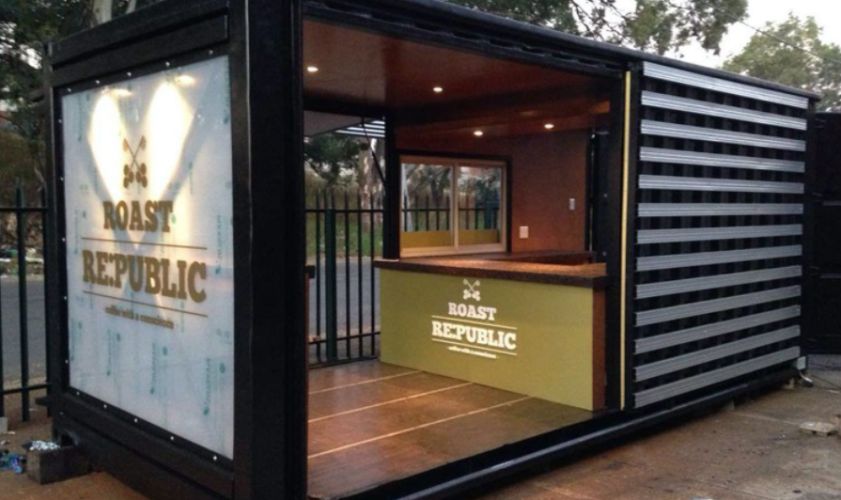
A traditional cafe buildout in a leased retail space runs $250,000 to $500,000 before you pour a single cup of coffee. You sign a five-year lease, wait 6-12 months for construction, and hope the location works. A shipping container cafe cuts that total build-out cost by 20-30%, opens in a fraction of the time, and gives you one option no brick-and-mortar build ever will: you can move it.
Container cafes are operating across the U.S. right now. Steelcraft runs multi-vendor container food halls in several markets. Boxyard RTP in North Carolina built an entire dining district from containers. Independent operators run single-unit shipping container coffee shops in parking lots, breweries, farmers markets, and vacant urban lots. The model works because economics works.
Here is what a real container cafe build-out costs, what permits you need, what equipment health departments require, and how to design a functional workflow inside an 8-foot-wide steel box.
20-Foot vs. 40-Foot: Matching Container Size to Your Menu
The container you pick dictates your menu, your staffing, and your revenue ceiling. These are not interchangeable choices.
A 20-foot container gives you 160 square feet of interior space (19’4“ x 7’8“ actual dimensions). That is enough for a beverage-only operation: coffee, espresso drinks, tea, juice, smoothies.
You can fit an espresso machine, a grinder, under-counter refrigeration, a 3-compartment sink, a handwash station, and a small prep area. One to two baristas can work the space without tripping over each other. Walk-up window service only. For exact interior measurements and wall thickness, see our container dimensions guide.
A 40-foot container gives you 320 square feet (39’5“ x 7’8“ interior). Now you have room for a full commercial kitchen: cooking line, Type I hood, refrigeration, dry storage, a proper prep station, and the required sinks. Two to four staff members can work a shift. You can run dual service windows or a concession window plus a small interior counter. A 40-foot build supports a full food menu alongside your coffee program.
Combined configurations open up more possibilities. Two 20-foot containers placed side by side give you one for the kitchen and one for customer seating. L-shaped arrangements create a sheltered courtyard. Stacked two-story designs (like the Starbucks Hualien location in Taiwan, built from 29 recycled containers) add visual impact and square footage. Multi-unit setups cost more and require structural engineering, but they scale the concept beyond what a single box can do.
For most first-time operators building a shipping container cafe, the choice is straightforward: 20-foot for coffee-only, 40-foot for food and coffee.
Container Cafe Cost Breakdown
Total container cafe cost runs $50,000 to $200,000 for most concepts. The range is wide because an unheated pop-up container cafe with a pour-over bar and a cash box is a different project than a permitted, insulated, full-kitchen build with a La Marzocca and a POS system.
Here is where the money goes:
| Line Item | Cost Range ($) | Notes |
|---|---|---|
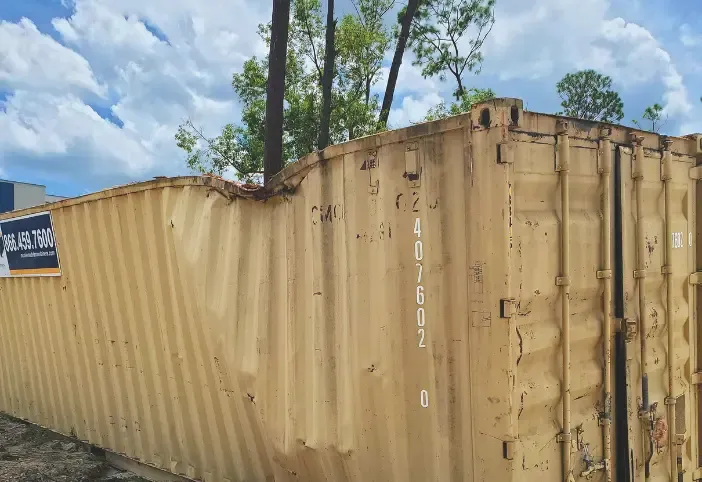
| Container purchase (used) | 2,000–6,000 | Wind-and-watertight grade; cosmetic dents acceptable |
| Container purchase (one-trip) | 4,000–8,000 | Near-new condition, minimal rust, better for food service |
| Structural modifications | 5,000–15,000 | Serving window cut-out, entry door, reinforcement framing |
| Plumbing | 3,000–8,000 | 3-compartment sink, handwash, grease trap, water heater |
| Electrical | 3,000–7,000 | 200A panel, outlets, lighting, signage circuit |
| HVAC | 2,000–6,000 | Mini-split or packaged unit; steel boxes get hot |
| Interior finish | 5,000–15,000 | Spray foam insulation, FRP walls, sealed flooring, counters |
| Equipment | 10,000–40,000 | Espresso machine, grinder, refrigeration, POS |
| Permits and plan review | 2,000–10,000 | Varies by jurisdiction; major cities run higher |
| Exterior deck/seating | 3,000–8,000 | Optional: 200–400 sq ft adds customer space |
Low-end total (beverage-only 20ft): 35,000 - 55,000 Mid-range (full-build 20ft or basic 40ft): 60,000 - 120,000 High-end (full-kitchen 40ft with finishes): 120,000 - 200,000
You can buy a shipping container cafe for sale as a base unit and hire a local fabricator for modifications, or you can work with a custom shipping container builder who delivers the unit turnkey. The turnkey route costs more but avoids the coordination headaches of managing five separate subcontractors.
Shipping Container Cafe Permits: The 8 Approvals You Need
Permitting is where most first-time operators underestimate both cost and timeline. A shipping container cafe needs the same food service permits as any restaurant, plus structural permits because you are modifying a steel vessel.
Plan for these eight approvals:
1. Building permit for structural modifications (cutting openings weakens the container; your engineer’s stamped drawings show how you restore structural integrity)
2. Plumbing permit covering water supply, drain lines, grease trap connection, and hot water capacity
3. Electrical permit for the 200-amp service panel, branch circuits, and any exterior signage
4. Health department food facility permit with plan check (the most time-consuming step; your floor plan, equipment list, and finish schedule all get reviewed)
5. Business license from the city or county
6. Fire department clearance covering extinguisher placement, exit paths, hood suppression (if applicable), and propane storage (if using gas equipment)
7. ADA compliance review for any public-facing service window, counter height, and approach path
8. Zoning approval or conditional use permit to operate a food service business at your chosen location
Timeline varies. In smaller jurisdictions, you can get through plan check in 4-6 weeks. In major metro areas, expect 3-6 months for health department plan review alone. Start permits before you start your build. Doing it the other way around means your finished container sits idle while you wait for approvals.
Budget $2,000 to $10,000 for permit fees and plan review. If your jurisdiction requires a licensed architect or engineer to stamp the plans (most do for structural modifications), add $3,000 to $5,000 for their fees.
Equipment and Plumbing That Health Departments Require
Health department requirements are not suggestions. Fail the inspection and you do not open. Every jurisdiction has its own code, but these items show up on nearly every health department checklist in the country.
Sinks and water systems. You need a 3-compartment sink with splash guards (wash, rinse, sanitize) and a separate handwash sink with soap and paper towel dispensers. These cannot share a basin. Your hot water heater must deliver 120 degrees F minimum to both sink locations. If you cook with oils or fats, a grease trap is required on the drain line.
Surfaces. All interior wall and floor surfaces in the food prep area must be smooth, non-absorbent, and easy to clean. FRP (fiberglass reinforced plastic) panels are the standard wall treatment. Stainless steel works for splash areas behind sinks and cooking stations. Floors need sealed concrete, commercial-grade sheet vinyl, or epoxy coating with coved base trim.
Ventilation. A beverage-only operation may get by with a mini-split and adequate fresh air exchange. Any cooking with heat (griddle, oven, fryer) requires a Type I commercial hood with an Ansul fire suppression system. The hood and suppression system alone run $3,000 to $8,000 installed, which is why many container coffee shop operators stick to beverage-only menus.
Pest control. Every penetration through the container walls (plumbing, electrical, HVAC) must be sealed. Entry doors need self-closing hardware. Screen any ventilation openings. Inspectors check for daylight gaps around the serving window frame.
All equipment that contacts food must be NSF-certified. Buy commercial, not residential. The health inspector will check certification labels.
Container Coffee Shop Design: Working Inside 8 Feet of Width
The 8-foot interior width of a shipping container forces a linear workflow, and that is actually an advantage. Commercial kitchen designers spend thousands optimizing flow. A container gives you a straight line by default: prep station, espresso machine or cooking line, serving window. Product moves in one direction. Staff do not cross paths.
Serving window specs. Cut a 48- to 72-inch-wide opening in the long wall. Use a fold-up awning-style shutter (doubles as a rain cover for customers) or a roll-down security shutter for after hours. Set the customer-facing counter at 36 to 42 inches high for comfortable standing service.
Interior layout. Place your espresso machine or primary cooking equipment centered on the serving window so the operator faces customers during service. Put the 3-compartment sink at one end, refrigeration at the other, dry storage above on wall-mounted shelving. The handwash sink goes near the serving position where staff can reach it without leaving the line.
Branding and exterior. A shipping container is a 20- or 40-foot steel billboard. The exterior takes paint, full vinyl wraps, and cladding (wood slat, corrugated metal, or perforated screen). Many container coffee shop design plans include branded awnings, exterior menu boards, and accent lighting. A well-branded container draws foot traffic in ways a generic storefront cannot.
Exterior seating. A 200- to 400-square-foot deck with cafe tables adds $3,000 to $8,000 to the build. It also moves your capacity from “walk-up window” to a place people sit and stay. Decks can be built from standard decking materials and attached to the container frame or freestanding.
Pop-Up Container Cafe vs. Permanent Installation
How you build a shipping container cafe depends on whether you plan to move it.
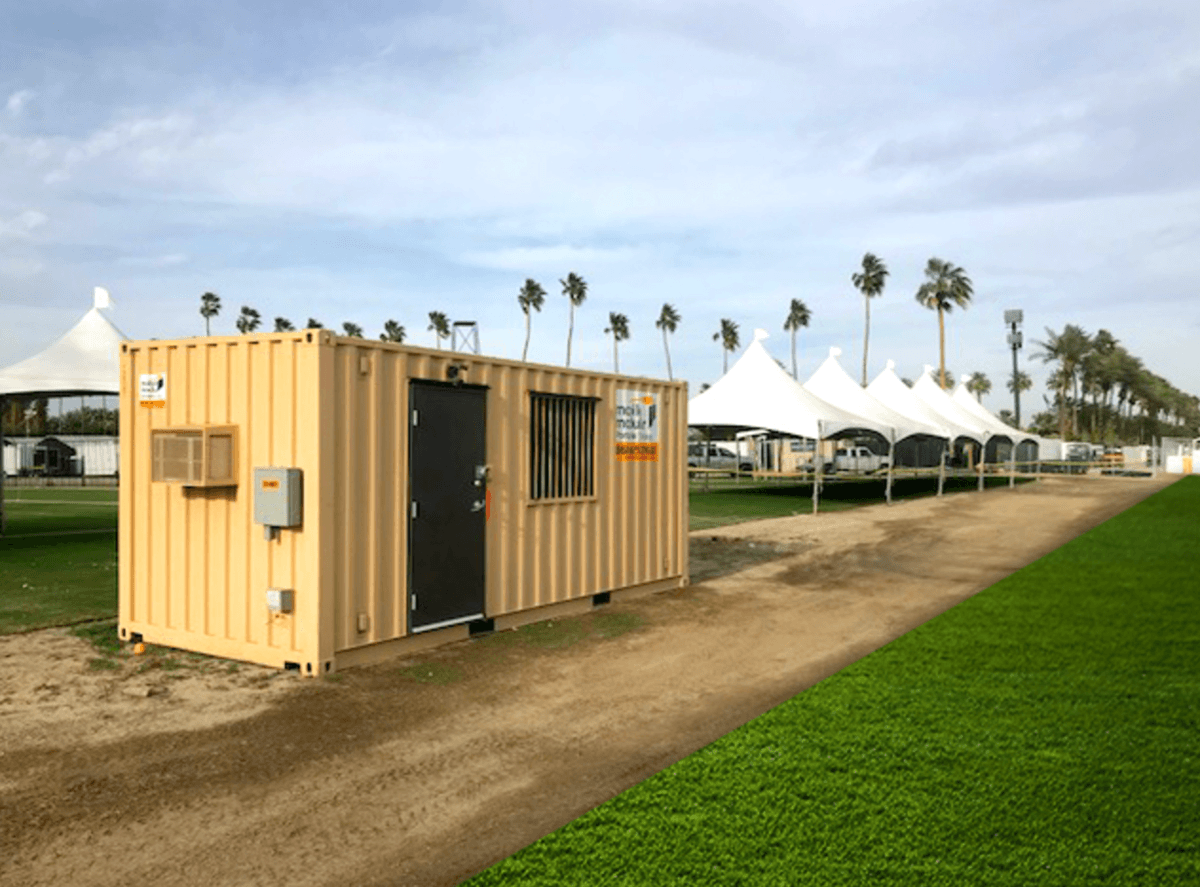
A pop-up container cafe stays on its original chassis or a flatbed trailer. It connects to temporary power (generator or spider box) and uses a portable water tank and gray water holding tank instead of permanent plumbing. Permitting is often handled through temporary event permits or mobile food vendor licenses rather than full building permits. Build-out costs run lower because you skip foundation work, permanent utility connections, and some finish requirements. The trade-off: limited menu options, less storage, and regular water tank refills and waste tank dumps.
A permanent container cafe gets placed on a concrete pad, pier blocks, or a compacted gravel base. Utility connections (water, sewer, electrical) are permanent. The container is typically removed from its chassis and set by crane. Full building permits, health department plan check, and ADA review apply. Build-out costs are higher, but you get a fully functioning commercial kitchen with no operational compromises. Most lenders and investors prefer permanent installations because they qualify as real property improvements.
If you are testing a concept or working seasonal events, start as a pop-up. If you have a site locked in and a proven menu, build permanent from the start. Converting a pop-up to permanent later means redoing plumbing, electrical, and permits, so the savings from a phased approach are smaller than they look on paper.
Get a Container That Fits Your Cafe Project
Mobile Modular Portable Storage supplies 20-foot and 40-foot containers from 30+ locations nationwide, available through storage container rental or direct purchase. While we don't provide fully custom container modifications, we can support certain customization needs depending on your project. Rentals bill on 30-day cycles (8.3% savings over calendar-month billing). Purchase units are available through our containers for sale inventory. Quotes come back within 1 hour of request.
Call 225-398-8176 or request a quote online with your site location and project specs. We'll match you with available inventory from the closest yard and discuss any project-specific needs we can accommodate.
Frequently Asked Questions
How long does it take to build a shipping container cafe?
A beverage-only 20-foot build takes 4-8 weeks for fabrication and fit-out, plus 4-12 weeks for permits depending on your jurisdiction. Full-kitchen 40-foot builds take 8-16 weeks for fabrication. The permit timeline runs in parallel if you start early.
Do I need a foundation for a container cafe?
Can I finance a shipping container cafe?
What size container do I need for a coffee shop?
Is a shipping container cafe cheaper than a traditional cafe?
Related Blogs