

April 21, 2026
Refrigerated Containers: Temp Ranges, Power Specs, and Rental Costs
Your walk-in cooler just failed during a Friday dinner rush. Your kitchen renovation pushed all cold storage offline for eight weeks. Harvest season arrived two weeks early, and your packing house is already at capacity.
Temperature-sensitive inventory loses value by the hour. A refrigerated container, also called a reefer container, delivers portable cold storage that holds temperatures from -30°C to +30°C (-22°F to +86°F) at your job site, parking lot, or loading dock. Below is the operational detail you need to spec, price, and deploy one.
How a Reefer Container Keeps Cargo Cold
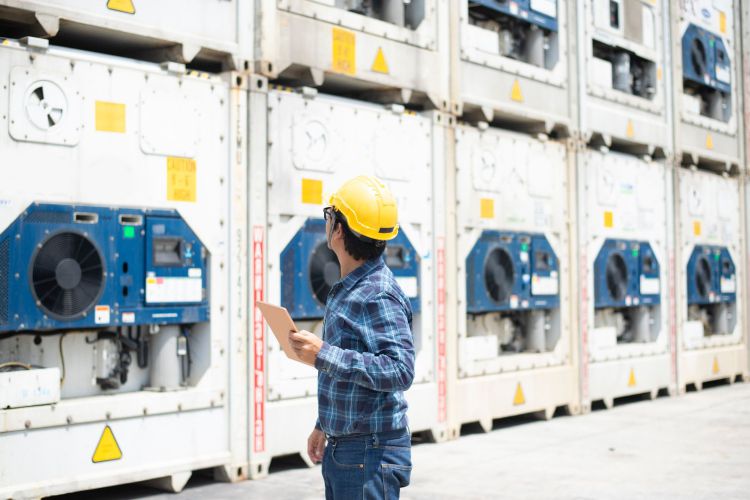
Refrigerated shipping containers use the same vapor-compression refrigeration cycle found in commercial walk-in coolers, scaled into a portable steel box. Four components do the work:
1. Compressor: Pressurizes low-pressure refrigerant gas into a high-pressure, high-temperature gas.
2. Condenser: Mounted on the exterior end wall, releases heat into the outside air, turning refrigerant into a high-pressure liquid.
3. Expansion valve: Drops liquid refrigerant pressure, rapidly cooling it before it enters the evaporator.
4. Evaporator: Mounted inside behind the refrigeration unit, absorbs heat from the cargo space. The refrigerant returns to a low-pressure gas and cycles back to the compressor.
Cold air enters at floor level and rises through the cargo. T-bar aluminum flooring creates channels beneath pallets and boxes, preventing hot spots and maintaining even temperatures from front to back. Walls and ceiling panels contain 4 to 5 inches of polyurethane foam insulation sandwiched between Corten steel exterior panels and food-grade stainless steel interior panels. The insulation holds set temperatures even in 100°F+ ambient conditions, as long as door openings stay brief.
Temperature Ranges by Cargo Type
Selecting the right set point depends entirely on what you are storing. The table below covers the most common cargo categories with their required temperature ranges.
| Cargo Type | Temperature Range | Example Goods |
|---|---|---|
| Deep frozen | -25°C to -18°C (-13°F to 0°F) | Meat, seafood, ice cream, frozen prepared meals |
| Standard frozen | -18°C to -10°C (0°F to +14°F) | Frozen vegetables, frozen dough, juice concentrate |
| Chilled / refrigerated | 0°C to +5°C (+32°F to +41°F) | Dairy, fresh meat, deli items, beverages |
| Cool storage | +5°C to +15°C (+41°F to +59°F) | Chocolate, certain cheeses, wine, craft beer |
| Pharmaceutical (standard) | +2°C to +8°C (+36°F to +46°F) | Vaccines, insulin, biologics, lab reagents |
| Pharmaceutical (ultra-cold) | -40°C to -60°C (-40°F to -76°F) | mRNA vaccines, certain gene therapies (requires super-freezer unit) |
| Floral | +1°C to +4°C (+34°F to +39°F) | Cut flowers, bulbs, live plants in dormancy |
| Fresh produce | +1°C to +13°C (+34°F to +55°F) | Leafy greens (+1°C), tomatoes (+10°C), bananas (+13°C) |
Standard reefer containers cover -30°C to +30°C. Ultra-cold pharmaceutical storage below -30°C requires a specialty super-freezer unit. For food, floral, and standard pharma applications, a conventional reefer container handles the job.
Power Requirements: Voltage, Phase, and Generator Options
Reefer containers do not generate their own power. They need an external electrical supply, and the specs matter. Wrong voltage will trip breakers or damage the compressor.
Standard configuration: 460V, 3-phase power with a 30-amp circuit. Most commercial and industrial properties already have 3-phase service available.
Single-phase option: Some 20ft reefer containers accept 220V, single-phase power with a 50-amp circuit. Useful at locations that lack 3-phase service, such as smaller restaurants, churches, or residential event venues. Confirm compatibility before delivery because not all units support single-phase.
Generator (genset) for off-grid sites: When grid power is unavailable, a diesel-powered generator set mounts directly to the container or sits nearby on a trailer. Genset rental adds $50 to $150 per day depending on fuel costs and capacity. Budget for diesel consumption of roughly 4 to 8 gallons per day.
Before delivery, have an electrician verify that your site panel supports the required voltage, amperage, and phase.
Reefer Container Sizes: 20ft and 40ft Specs
Refrigerated containers are most commonly available in 20ft and 40ft lengths. For a broader comparison across standard dry containers, see our guide to container dimensions.
| Specification | 20ft Reefer | 40ft Reefer |
|---|---|---|
| Exterior length | 20 ft (6.1 m) | 40 ft (12.2 m) |
| Exterior width | 8 ft (2.44 m) | 8 ft (2.44 m) |
| Exterior height | 8 ft 6 in (2.59 m) | 8 ft 6 in (2.59 m) |
| Interior length | 17 ft 8 in (5.4 m) | 37 ft 8 in (11.5 m) |
| Interior width | 7 ft 5 in (2.26 m) | 7 ft 5 in (2.26 m) |
| Interior height | 7 ft 5 in (2.26 m) | 7 ft 5 in (2.26 m) |
| Door opening width | 7 ft 5 in (2.26 m) | 7 ft 5 in (2.26 m) |
| Door opening height | 7 ft 3 in (2.21 m) | 7 ft 3 in (2.21 m) |
| Tare weight | ~6,400 lbs (2,900 kg) | ~10,780 lbs (4,890 kg) |
| Max payload | ~47,180 lbs (21,400 kg) | ~57,320 lbs (26,000 kg) |
| Insulation thickness | 4–5 inches polyurethane foam | 4–5 inches polyurethane foam |
Interior volume is smaller than a standard dry container because the insulation and refrigeration unit consume space. A 20ft reefer provides roughly 1,000 cubic feet of usable cargo space, while a 40-foot containers version offers around 2,040 cubic feet. MMPS also carries 10ft and 24ft options. If you do not need active refrigeration, ask about insulated (non-refrigerated) containers, which cost less and require no power connection.
On-Site Use Cases: Who Rents Reefer Containers and Why
Restaurant and Foodservice Operations
Restaurants are the single largest segment of on-site reefer container users. The most common scenario: a kitchen renovation. When a contractor tears out your walk-in cooler, you still need cold storage for the four to twelve weeks of construction. A 20ft reefer container parked behind the building keeps your food inventory at safe holding temperatures while the renovation runs.
Beyond renovations, restaurants rent reefer containers for seasonal peaks. Catering companies handling large outdoor events, barbecue competition teams, food truck commissaries, and hotel banquet operations all use portable cold storage to bridge capacity gaps. MMPS offers refrigerated container rental in sizes from 10ft to 40ft to match the volume you actually need.
Pharmaceutical and Medical Storage
Hospitals, pharmacies, and public health agencies use refrigerated containers for vaccine storage during mass immunization campaigns and facility expansions. Pharmaceutical applications demand tight temperature control, typically +2°C to +8°C for standard vaccines, with continuous monitoring. Many operations add data loggers to document temperature compliance for regulatory audits.
Agriculture, Floral, and Produce
Farms and packing houses rent reefer containers to handle harvest surges when permanent cold storage fills up ahead of schedule. Florists and flower distributors use them during peak seasons like Valentine’s Day and Mother’s Day, where a few degrees of temperature deviation shortens vase life significantly.
Construction, Events, and Disaster Relief
Construction crews on remote sites use reefer containers for temperature-sensitive materials like epoxy resins and adhesives. Event producers rent them for outdoor festivals. Emergency management agencies deploy them for disaster relief food distribution. Lower-volume use cases, but the portability of a reefer container makes it the fastest option when permanent infrastructure does not exist.
Purchase vs. Rental: Refrigerated Container Costs
Reefer containers cost roughly six times more than a standard dry shipping container of the same size. The premium covers the refrigeration unit, insulation, stainless steel interior panels, and T-bar flooring.
| Condition | 20ft Reefer | 40ft Reefer |
|---|---|---|
| New | ~$33,000 | ~$40,000 |
| Used (good working condition) | Starting ~$10,000 | ~$25,000 |
New units come with a manufacturer warranty on the refrigeration system. Used units vary widely, so inspect the compressor, door gaskets, insulation integrity, and thermostat accuracy before purchase. Mobile Modular Portable Storage lists containers for sale when inventory allows.
Rental Pricing
Rates fluctuate by container size, season (summer demand runs higher), term length, and delivery distance. MMPS uses 30-day billing cycles rather than the 28-day cycles common among competitors, saving roughly 8.3% in annual costs on the same daily rate.
Maintenance Checklist and Common Issues
Reefer containers are mechanically more demanding than dry storage units. A basic maintenance routine prevents most service calls.
Monthly tasks:
• Clean condenser coils with compressed air or a coil brush. Dirty coils force the compressor to overwork.
• Inspect door gaskets for cracks, tears, or compression set. A failed gasket lets warm air in and keeps the unit running continuously.
• Check the drain line for blockages that cause ice buildup on the evaporator coils.
Quarterly tasks:
• Have a certified technician check refrigerant levels. Low refrigerant usually means a leak.
• Test thermostat calibration with an independent digital thermometer at multiple points inside the container.
• Inspect electrical connections and wiring for corrosion or heat damage.
The most common problem is air leakage around door seals. The second most common issue is dirty condenser coils causing compressor failure. Both are preventable with routine attention. If you need a modified unit with custom shelving, partition walls, or dual-zone temperature control, MMPS can discuss custom shipping containers built to your specs.
New vs. Used Reefer Containers: What to Inspect
One-trip (near-new) containers have made a single ocean voyage and arrive in excellent condition. The refrigeration system, insulation, and door hardware are essentially new. Expect pricing close to new, but you get a unit with a full service life ahead of it.
Used containers offer significant savings but require hands-on inspection before you commit:
• Run the refrigeration unit for at least 4 hours and verify it reaches and holds the target set point.
• Open and close both cargo doors. They should swing freely, latch securely, and seat flush against the gaskets.
• Look inside for rust, dents, or punctures in the stainless steel interior panels that could compromise insulation.
• Check the floor T-bars for bending or corrosion that would restrict airflow.
• Ask for service records on the compressor, including hours of operation and refrigerant type.
A used reefer container in good working condition is a solid investment. A unit with deferred maintenance or undisclosed compressor issues is not.
Get a Reefer Container at Your Site Within Days
Mobile Modular Portable Storage rents refrigerated containers in 10ft, 20ft, 24ft, and 40ft sizes in select locations. Quote responses come back within 1 hour, and 30-day billing cycles save you money over the length of your rental. Call 225-269-2349 or request a quote online to get a refrigerated container delivered to your site.
Frequently Asked Questions
What size refrigerated container do I need for a restaurant renovation?
A 20ft reefer container provides roughly 1,000 cubic feet of cold storage, enough for most single-location restaurants to maintain their full perishable inventory during a kitchen remodel. High-volume operations or multi-unit commissaries may need a 40ft unit or two 20ft containers set to different temperatures (one frozen, one chilled).
Can I plug a reefer container into a standard electrical outlet?
How much does it cost to rent a refrigerated container per month?
How long can a reefer container hold temperature without power?
Is a refrigerated container the same as a cold storage container?
Related Blogs