- Rent, Lease, or Purchase
- |



May 20, 2026
Buy and Rent Shipping Containers: Which Option Is Right for Your Project?
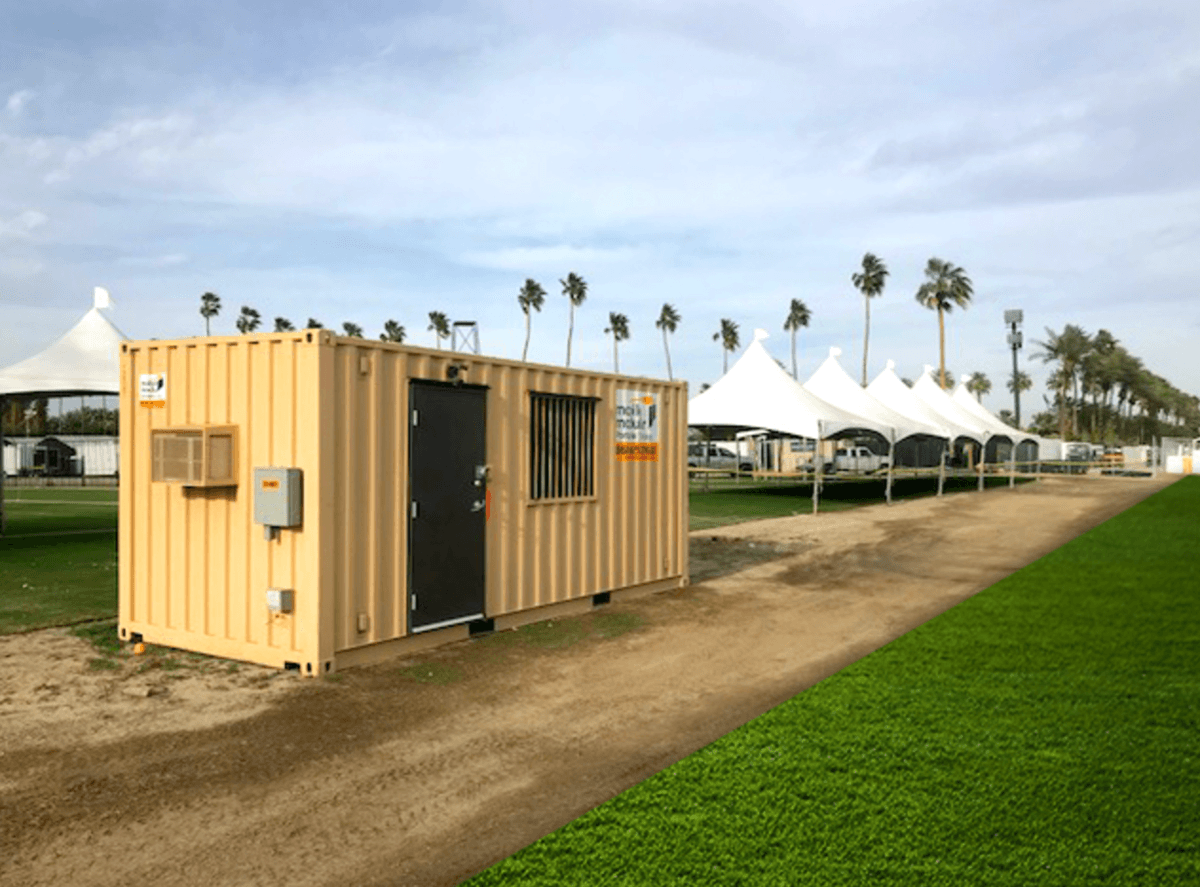
When you need a shipping container, whether for storage, an on-site office, or a long-term facility solution, the first decision is not which size to choose. It is how you want to acquire it.
The three main options for buying and renting shipping containers each make sense in different situations. Renting gives you flexibility with no long-term commitment. Buying turns a container into a permanent asset you own outright. Leasing sits in the middle, with a lower upfront cost than buying, with a path to ownership if you want it. And for some buyers, a buy-and-sell strategy turns containers into a cost recovery tool.
Not sure which size container your project actually needs? Start with our 20ft vs 40ft container comparison before deciding how to acquire it. This guide then walks through all three acquisition models, costs, pros, cons, and the specific circumstances where each one wins.
Option 1: Renting a Shipping Container
Renting a shipping container means paying a monthly fee to use the unit for as long as you need it, with the ability to return it when your project ends. The container provider handles delivery, pickup, and maintenance.
When Renting Makes Sense
• Short-term projects - construction sites, seasonal retail, temporary events, disaster response
• Uncertain timelines - when you are not sure how long you will need the space
• No capital budget available - renting converts a large purchase into a manageable monthly operating expense
• Maintenance-free preference - the provider handles repairs and replacements
• Flexibility is a priority - you can swap sizes, upgrade to a different unit, or return it when needs change
Typical Rental Costs
| Container Size | Typical Monthly Rental |
|---|---|
| 10ft storage container | $60 – $120/month |
| 20ft storage container | $75 – $200/month |
| 24ft storage container | $90 – $220/month |
| 40ft storage container | $100 – $250/month |
Rates vary by location, container condition, rental duration, and market demand. Delivery and pickup fees are typically separate.
Browse our portable storage containers to see available rental sizes and configurations, or explore office containers for rent if you need on-site workspace rather than storage.
Pros of Renting
• Low upfront cost - no large capital outlay required
• Flexibility to return, upgrade, or add units as needs change
• Maintenance and repairs covered by the provider
• No depreciation, storage, or long-term asset management concerns
• Scales easily - add more containers during peak periods
Cons of Renting
• Monthly costs add up over time - renting long-term costs more than buying
• You build no equity or asset value
• Container availability may vary during high-demand periods
• Customizations may be limited on rented units
Option 2: Buying a Shipping Container
Buying a shipping container outright means you own it permanently. It becomes a business asset on your books, you can customize it however you need, and when you no longer need it, you can sell it and recover a portion of your investment.
When Buying Makes Sense
• Long-term or permanent use - the container will stay in place for years
• Significant customization needed - you want to modify the structure, add permanent fixtures, or convert it for a specific use
• Repeated, ongoing use - if you will use the same container across multiple projects over time
• Buy and sell strategy - purchase, use, then resell to recover value
• Capital budget available - you can absorb the upfront cost and prefer asset ownership
New vs. Used vs. One-Trip Containers
When buying, you have three condition grades to choose from:
New (factory-fresh) containers are manufactured to ISO standards and have never been used for freight. They offer pristine condition, no dents or rust, and the longest lifespan. Premium price, but maximum quality.
One-trip containers have made a single journey, typically from a manufacturing facility in Asia to a U.S. port. They are nearly new, with minimal wear, and represent excellent value for buyers who want close-to-new quality without the new price premium.
Used (cargo-worthy or wind-and-watertight) containers have been in active freight service. Cargo-worthy units are certified for continued use; wind-and-watertight units are structurally sound and weather-sealed but no longer certified for ocean freight. Used containers carry a lower price and are suitable for most storage applications. View our current used shipping containers for sale to see available inventory and grades.
Typical Purchase Costs
| Container | Used (W&T) | One-Trip | New |
|---|---|---|---|
| 20ft standard | $2,500 – $5,500 | $3,500 – $6,500 | $4,500 – $8,000 |
| 40ft standard | $4,000 – $8,500 | $5,500 – $9,500 | $6,500 – $12,000 |
| 40ft high cube | $4,500 – $9,500 | $6,000 – $10,500 | $7,500 – $14,000 |
Prices fluctuate with steel markets, port inventory levels, and regional demand.
Pros of Buying
• Full ownership - no ongoing monthly costs once purchased
• Complete freedom to modify and customize the container
• Long-term value - containers last 25+ years with basic maintenance
• Resale potential - well-maintained containers retain significant market value
• Asset on your balance sheet - tangible, depreciable business asset
Cons of Buying
• Large upfront capital cost
• You are responsible for maintenance and repairs
• Requires a plan for the container when the project ends
• Transportation and placement logistics are your responsibility
Option 3: Leasing a Shipping Container
Leasing, including lease-to-own arrangements, combines elements of renting and buying. You make regular payments over a defined term, with the option (or obligation) to purchase the container at the end of the lease period.
When Leasing Makes Sense
• You want to own the container long-term but lack upfront capital - leasing spreads the purchase cost across monthly payments
• Mid-to-long-term projects - typically 12 months or longer
• Tax and accounting preference - lease payments may be treated differently than a capital purchase, depending on your accounting structure
• Uncertain about commitment length - a lease-to-own option lets you transition to ownership once the project proves out
Typical Lease Costs
Lease payments are generally slightly higher than rental rates but structured to build toward ownership. A 36-month lease-to-own on a 20ft container might run $120 – $250/month, with a buyout at the end of the term.
Pros of Leasing
• Lower upfront cost than an outright purchase
• Monthly payments are predictable - easier to budget
• Path to ownership without full capital commitment upfront
• Flexible terms - lease periods typically range from 12 to 60 months
Cons of Leasing
• Total cost over the lease term exceeds the purchase price
• Less flexibility than renting - breaking a lease early typically incurs fees
• You are committed to a specific unit for the lease duration
Buy and Sell Shipping Containers: Using Containers as Recoverable Assets
One strategy worth understanding is the buy and sell approach purchasing a container, using it for your project, and then reselling it when you are done.
Shipping containers hold their value better than most temporary infrastructure assets. A well-maintained used container purchased for $3,500 can often be resold for $2,500 – $3,000 after two to three years of use recovering 70–85% of the original cost. Compared to years of rental payments for the same period, the net cost of ownership can be significantly lower.
The buy-and-sell approach works best when: - Your project lasts 2 years or more, long enough for rentals to exceed the purchase price - You have a clear exit plan, a buyer, a broker, or a resale market in your region - The container has been maintained in sellable condition, avoiding heavy modifications that reduce resale value
For buyers with strong resale markets in their area, this can be the most cost-effective approach of all three acquisition models over a medium-term horizon.
Rent vs Buy vs Lease: Cost Comparison Over Time
The right choice depends heavily on how long you need the container. Here is a simplified cost comparison for a standard 20ft storage container across different time horizons:
| Duration | Renting ($125/mo) | Buying (Used, $4,000) | Leasing ($175/mo, 36-mo) |
|---|---|---|---|
| 6 months | $750 | $4,000 (own) | $1,050 |
| 12 months | $1,500 | $4,000 (own) | $2,100 |
| 24 months | $3,000 | $4,000 (own) | $4,200 (own) |
| 36 months | $4,500 | $4,000 (own) | $6,300 (own) |
| 48 months | $6,000 | $4,000 (own) | Own |
Note: Buying costs do not include delivery, placement, or maintenance. Rental costs include provider-managed maintenance. Resale value not factored in for buy/sell scenarios.
The crossover point where buying becomes cheaper than renting typically falls between 18 and 30 months, depending on purchase price and monthly rental rate. If you need a container longer than 2 years, buying almost always delivers better long-term value.
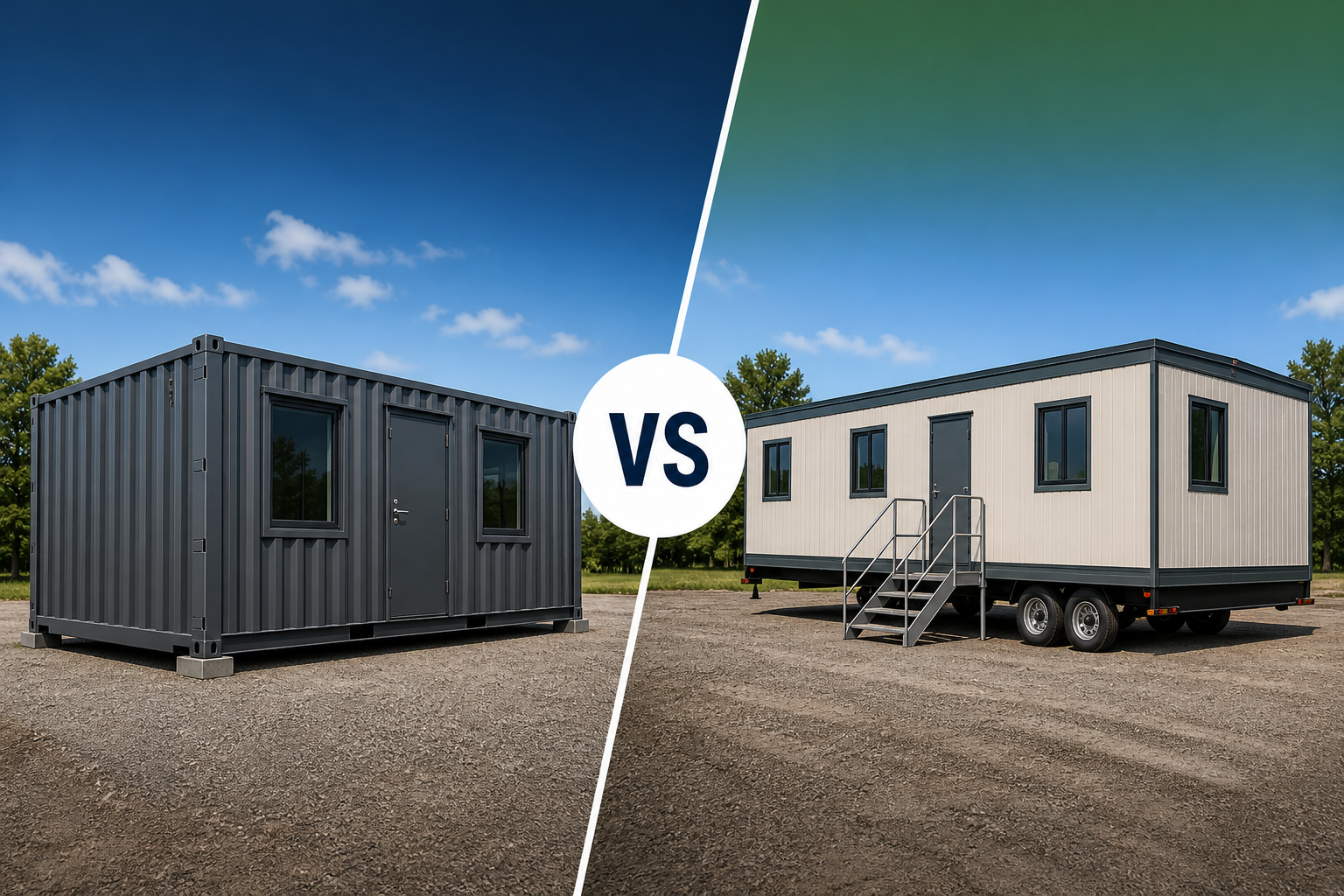
If you are also evaluating whether a container or an office trailer is the right on-site solution for your workspace needs, our container vs trailer guide covers security, mobility, durability, and cost side by side.
Which Option Is Right for You?
| Your Situation | Best Option |
|---|---|
| Short-term project (under 12 months) | Rent |
| Uncertain or open-ended timeline | Rent |
| Long-term use (2+ years), want ownership | Buy |
| Need heavy customization | Buy |
| Want ownership but limited upfront capital | Lease-to-own |
| Planning to resell after the project | Buy and sell |
| Multiple locations, rotating fleet | Rent or Lease |
| Government or corporate procurement | Lease or Buy |
Get the Right Container on the Right Terms
Whether you are looking to rent for a short-term project, buy for long-term value, or explore a lease-to-own arrangement, Mobile Modular Containers offers flexible options across our full product line portable storage containers, office containers, combo units, refrigerated containers, and more.
Available in 10ft, 20ft, 24ft, and 40ft sizes. Nationwide delivery across 28+ states.
Request a quote or call 866-545-7143 to talk through your options.
Related Blogs
Subscribe to Our Blog
Enter your email address to subscribe to the blog and receive the notification of new posts by email.
Thank You for Subscribing to Our Blog!
Stay tuned for upcoming emails with valuable content that we hope will enhance your experience with our brand.
Both Pardot and mg360 form submissions failed.