

May 4, 2026
Container vs Trailer: Key Differences, Costs & Which Is Right for You
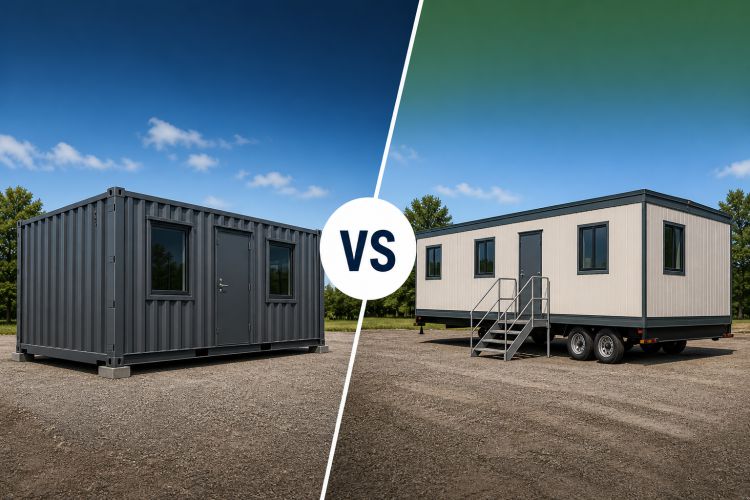
When you need on-site workspace or storage fast two options consistently come up: a container or a trailer. Both put functional space where you need it without the cost and timeline of permanent construction. But they are built differently, perform differently, and suit different types of projects.
The container vs trailer decision depends on how long you need the space, how often you plan to move it, what level of security you require, and what your site allows. This guide breaks down every major difference so you can match the right solution to your project from day one.
What Is a Container Office?
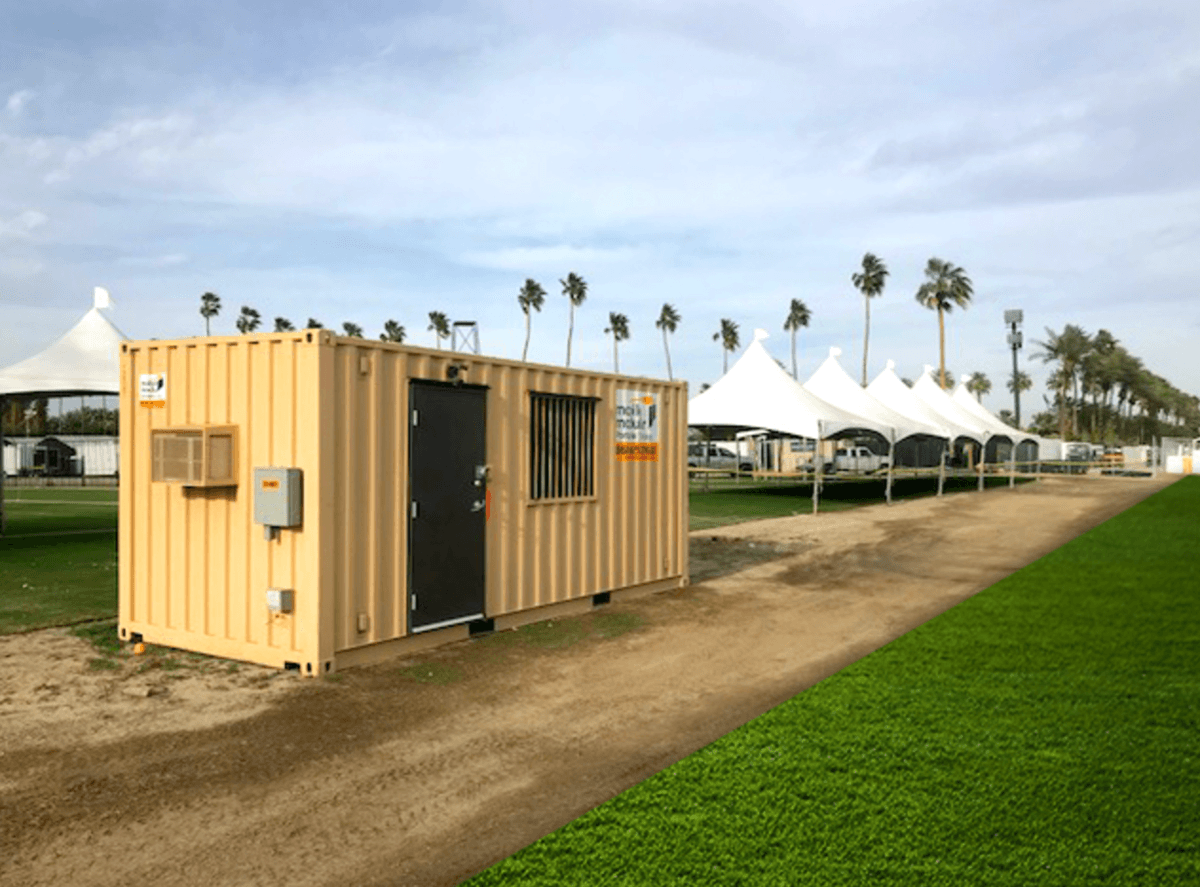
A container office is a portable workspace built from a steel intermodal shipping container, the same corrugated steel box used in global freight shipping. The container’s structural steel frame is modified and fitted with insulation, electrical wiring, HVAC systems, flooring, windows, and doors to create a functional on-site office.
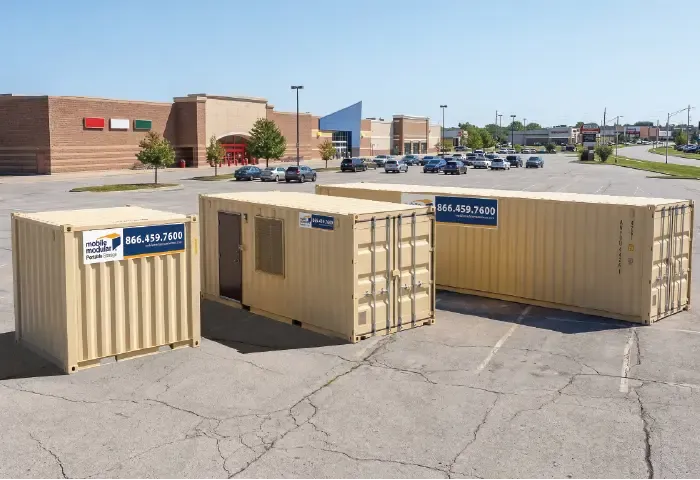
Container offices are available in 10ft, 14ft, 20ft, and 40ft sizes. The steel construction gives them exceptional durability, security, and weather resistance. Unlike trailers, they have no chassis or axle, they sit on the ground, on blocks, or on a concrete pad, and require a flatbed or tilt-bed truck for delivery and a crane or forklift for placement.
Mobile Modular Portable Storage offers container offices in standard and Elite configurations, including units with integrated restrooms and office-storage combo layouts that combine workspace and secure storage in a single footprint.
What Is an Office Trailer?
An office trailer, also called a mobile office or construction trailer, is a prefabricated workspace built on a permanent steel chassis with wheels and an axle. Unlike a container, an office trailer can be hitched to a truck and towed directly to a new location without lifting equipment.
Trailers are typically constructed with a wood or light steel frame, vinyl or aluminum siding, and standard residential-style interiors. They deliver a more conventional office feel, with larger windows, drop ceilings, and finished wall surfaces.
Standard office trailer sizes range from 8x20 ft on the smaller end to 12x60 ft for larger units. Double-wide configurations can expand usable floor space further.
| Feature | Container Office | Office Trailer |
|---|---|---|
| Construction | Corrugated steel (ISO shipping container) | Wood/light steel frame on wheeled chassis |
| Typical Sizes | 10ft, 14ft, 20ft, 40ft | 8x20 ft to 12x60 ft |
| Mobility | Requires flatbed truck + crane/forklift | Can be towed directly by a vehicle |
| Security | High – steel walls, lockbox construction | Moderate – standard door locks |
| Durability | 25+ year lifespan | 15–20 year lifespan |
| Weather Resistance | Excellent – watertight steel shell | Good – may require more maintenance |
| Customization | High – modular, expandable, stackable | Moderate – standard layouts |
| Interior Feel | Industrial-modern | Traditional office |
| Best For | Long-term, high-security, harsh environments | Short-term, frequent relocation needs |
| Foundation Required | Blocks, pads, or concrete | Level ground or piers |
Trailer and Container Difference: Construction & Durability
The most fundamental trailer and container difference is in how they are built.
A container office starts with an ISO steel shipping container, a structure engineered to stack nine units high, fully loaded, and withstand ocean crossings in extreme weather. That construction translates directly to on-site performance: the steel shell resists impact, weathering, forced entry, and the wear of years on an active job site. With proper maintenance, a steel container office can remain in service for 25 years or more.
An office trailer is built more like a modular room on wheels. The frame is lighter, the walls are thinner, and the materials, vinyl siding, wood framing, and standard insulation, are similar to residential construction. Trailers deliver a polished, finished interior faster, but they are more susceptible to dents, moisture intrusion at seams, and structural wear over time. A well-maintained trailer typically performs well for 15 to 20 years.
Bottom line: If your project runs long, operates in a harsh environment, or demands maximum durability, the container holds a clear structural advantage. Our 20ft and 40ft container size guide breaks down dimensions and weight specs in detail if you are still deciding on the right footprint.
Container vs Trailer: Security
Security is a significant differentiator in the container vs trailer debate.
A container office is fundamentally a steel lockbox. The walls, floor, and ceiling are corrugated steel. Door frames are reinforced, and high-security padlock systems can be added to lockboxes welded directly into the door frame making it nearly impossible to pry or cut access without heavy equipment.
An office trailer uses standard door locks on conventional doorframes. The walls, while functional, are not designed to resist forced entry the way a steel container is. For sites with high-value tools, sensitive documents, or expensive electronics, the container’s security profile is meaningfully superior.
Container vs Trailer: Mobility
This is where the trailer holds a clear advantage.
An office trailer is designed for mobility. It sits on a wheeled chassis, connects to a standard fifth-wheel hitch, and can be relocated by a truck driver without specialized lifting equipment. For projects that move frequently, pipeline crews, traveling events, and multi-site construction operations, a trailer's mobility reduces the logistical overhead of each move.
A container office requires a flatbed or tilt-bed truck for transport and a forklift, or Moffett for precise placement. Each move requires more planning and equipment. However, once placed, a container sits more stably and securely than a trailer on a chassis.
The practical question: How often will this unit move? If the answer is multiple times per year, the trailer’s towable design reduces cost and complexity. If the unit will stay in place for months or years at a time, the container’s stability and durability make the delivery logistics a one-time consideration.
Shipping Container vs Semi Trailer
The phrase shipping container vs semi trailer refers to a different comparison than office containers vs office trailers and it is worth clarifying.
A shipping container (also called an intermodal container) is a standalone steel box typically 20ft or 40ft long used to transport freight by ship, rail, and truck. It has no wheels or axle of its own. When used on the road, it is loaded onto a specialized flatbed trailer called a container chassis.
A semi-trailer (or semi-truck) is the wheeled trailer unit pulled by a semi-truck (tractor). Semi-trailers are designed to carry freight while attached to a truck and are not self-standing storage units; they require the truck to remain mobile and are not intended for long-term stationary use.
For on-site storage or workspace, a shipping container is the appropriate solution. It is designed to sit independently, be secured in place, and remain weather-tight for extended periods. A semi-trailer used as temporary storage is a makeshift approach that comes with liability, stability, and insurance complications.
What Is a Container Trailer?
A container trailer, more precisely called a container chassis or container flatbed trailer, is a specialized type of highway trailer designed specifically to transport ISO shipping containers. It has a flat skeletal frame, twist locks at the corner positions to secure the container, and no enclosed body.
Container trailers are used in port logistics and freight transport to move 20ft and 40ft ISO containers between ships, rail yards, warehouses, and delivery destinations. They are not the same as office trailers or storage trailers.
If you have heard the term “container trailer” in the context of on-site storage or office space, it most commonly refers to a portable storage container or office container that has been delivered to a site via a tilt-bed truck, not a chassis-based transport trailer.
Container vs Trailer: Cost Comparison
Rental Costs
Monthly rental rates depend on size, configuration, and location, but as general benchmarks:
| Unit Type | Typical Monthly Rental |
|---|---|
| 20ft Container Office (standard) | $150–$300/month |
| 40ft Container Office (standard) | $200–$450/month |
| 20ft Office Trailer (standard) | $125–$275/month |
| 40–44ft Office Trailer (standard) | $250–$500/month |
Rental rates for both container offices and office trailers are closely competitive at comparable sizes. The key cost difference often comes from delivery and setup; container offices require crane or forklift placement (one-time cost), while trailers can be dropped by the tow vehicle. For a deeper breakdown of whether renting or buying makes more sense for your project timeline, see our rent vs buy storage container guide.
Purchase Costs
• Used 20ft container office: $3,500 – $7,000
• Used 40ft container office: $5,500 – $12,000
• Used office trailer (20ft equivalent): $4,000 – $9,000
• Used office trailer (40ft equivalent): $8,000 – $18,000
For purchase, container offices often deliver better long-term value given their longer lifespan, lower maintenance requirements, and stronger resale market. View our current used containers for sale to see available inventory.
Which Should You Choose?
Choose a Container Office When:
• Your project site is fixed, or semi-permanent, and the unit will stay in place for months or years
• Security is a priority for high-value tools, equipment, or sensitive materials on site
• You are operating in harsh weather or remote environments where structural resilience matters
• You want long-term ownership value, containers hold resale value, and last decades
• You need a combination office and storage unit in a single footprint
• Your site requires custom configurations for restrooms, combo units, and stackable layouts
Choose an Office Trailer When:
• Your operation moves frequently, the towable design reduces relocation cost and downtime
• You need a conventional, finished office feel. Quick trailers often feel more like a standard office interior out of the box
• Your project has a defined short-term duration, and you want straightforward delivery and pickup
• Site access is limited to standard truck delivery without crane equipment
Find the Right On-Site Workspace Solution
Mobile Modular Containers offers container offices, elite office containers with integrated restrooms, office-storage combo units, and portable storage containers available for rent, purchase, or lease-to-own in 10ft, 14ft, 20ft, and 40ft sizes.
With delivery across 28+ states and a team that handles permitting, placement, and setup, we make it straightforward to get the right unit on-site fast.
Request a quote or call 866-260-1823 to discuss your project requirements.
Related Blogs