

October 27, 2026
Construction Site Security Checklist for Container Storage
A strong construction site security checklist covers more than locks. Assign clear owners, control access, keep an accurate inventory, and include the container in your wider site security plan. Use the checklist at opening, shift changes, and close so your team knows who completed each step.
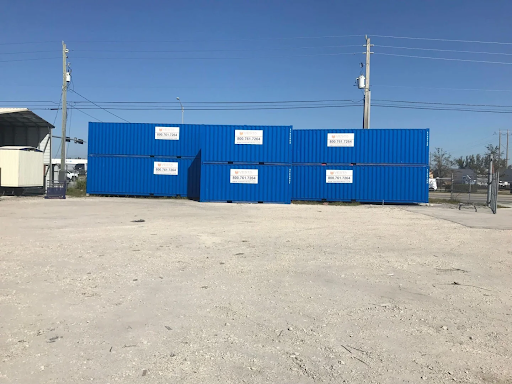
For projects with several work areas, Apollo Mechanical used five Mobile Modular Portable Storage containers during Pacific Northwest mechanical construction projects. Give each storage area its own access and closing routine so tools remain easy to find and responsibility is clear.
Use this checklist to organize tool and material storage, then review the full security plan with your project team, insurer, and security provider.
Construction site security checklist for storage
| Area | Check | Owner |
|---|---|---|
| Inventory | Record valuable tools, serial numbers and identifying photographs | Assign a named person |
| Access | Decide who receives keys or access credentials and how returns are recorded | Assign a named person |
| Container | Inspect the doors and seals, then check the locking bars for damage | Assign a named person |
| Lock | Confirm hardware compatibility and the agreed locking procedure | Assign a named person |
| Placement | Keep storage accessible to the crew and within the wider site monitoring plan | Assign a named person |
| Daily close | Return tools, verify contents, secure doors and check the access area | Assign a named person |
| Deliveries | Agree where after-hours materials go and who acknowledges receipt | Assign a named person |
| Incident response | Record contacts, escalation steps and how evidence will be preserved | Assign a named person |
Before the first shift, record the container ID, key holders, inventory, closing owner, and incident contact. Photograph valuable tools and note their serial numbers. Keep a separate inventory for each storage location, and date and sign every closing record. Document any unresolved issue so the next person knows what needs attention.
Choose storage around what needs protection
Start with what you need to protect. Separate daily-use tools from bulk materials and long-term inventory, and identify anything that requires special handling or storage conditions. A standard container is not the right fit for every material.
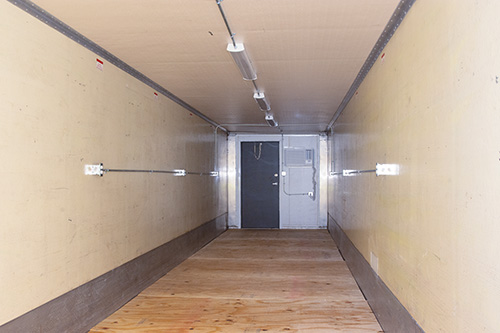
A 20-foot storage container may suit a focused tool area. A 40-foot storage container gives you a longer interior for larger inventories or materials. Include a usable access route inside, not only the floor area occupied by the stored items. Use the shipping container dimensions guide to compare the space before drawing the storage layout.
For fuel, gases, chemicals or other regulated materials, confirm the applicable storage requirements with the project safety team. An ordinary dry container and a secure padlock do not establish suitability for hazardous contents.
Match the lock to the doors and the access procedure
Inspect the door hardware before buying a lock. The locking points and available protective hardware determine what fits. Ask about container lock options for the actual container, including any available HASP arrangement or lock enclosure.
Treat key control as part of the hardware decision. Record who holds keys, how replacements are requested and what happens when a subcontractor leaves the project. Keep spare keys in a controlled location, with an agreed process for access.
No lock can prevent every theft. Support the hardware with controlled site access, routine checks, and a consistent closing process. If you use cameras or alarms, confirm placement, power, monitoring, and response responsibilities with the provider.
Need on-site tool storage that fits the job? Request a quote from Mobile Modular Portable Storage with your inventory, preferred access arrangement and project location.
Place the container where it supports the work
Place the container where authorized team members can reach tools without crossing unnecessary active work areas. Allow room for deliveries, vehicle movement, door swing, and changes to the site layout. Keep the entrance and access route clear.
Include the container in the project's wider observation plan. A fence, screen or pile of materials can hide an entrance that was visible when the container arrived. Revisit the layout as work progresses and new equipment moves onto the site.
Good housekeeping also supports safe retrieval. OSHA's construction storage requirements address secure material stacking, clear aisles and storage-area hazards. Apply the relevant requirements to your storage layout and the routes people use to retrieve materials.
Construction storage in practice
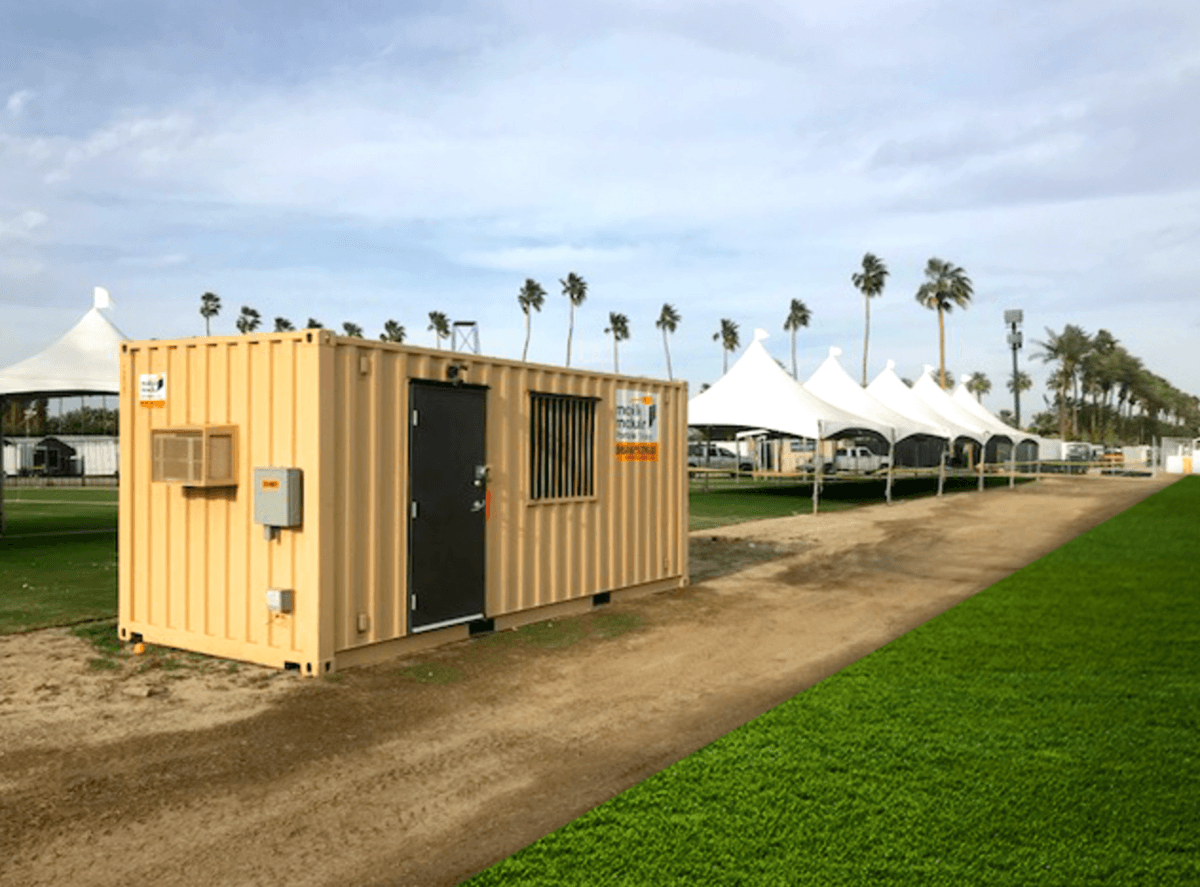
For a Costco construction project in Pleasanton, California, Omni Mechanical used four 24-foot storage containers, four 40-foot double-door storage containers and a 20-foot office container. The containers provided on-site access to tools and materials alongside project management space.
Choose container sizes and door configurations based on the crews, tools, and materials they will support. As the jobsite changes, keep every entrance within the access-control and closing plan.
Make closing checks repeatable
Build a short end-of-shift routine:
-
Check returned tools against the inventory or checkout record.
-
Put daily-use items in their assigned places.
-
Clear the doorway and the route outside it.
-
Close the doors in the proper sequence and secure the locking hardware.
-
Check that planned lighting, monitoring and site access controls are operating.
-
Record missing items, damage or unusual activity for the next shift.
For expensive tools, retain purchase records and identifying photographs outside the container. They can support an inventory reconciliation or an incident report if access to the site is restricted.
Questions about construction site storage security
Is a shipping container theft proof?
No. A container provides an enclosed storage area, and appropriate locks can strengthen access control. Control keys and site access, and assign responsibility for observation and incident response.
Should I put all tools in one container?
Choose the arrangement that matches inventory, access and responsibility. Separate storage areas can help different crews, but each needs its own locking and closing checks. Avoid adding containers without an access-control plan.
Can I add shelving to keep tools organized?
Ask about approved container shelving options, their loading limits and the available floor and aisle space. Follow the provider's approval process before altering a rental container.
What should I include when requesting construction storage?
Provide your site location, dates, inventory, largest items, loading method and preferred locking arrangement. Include a sketch of the proposed placement and delivery approach.
Portable Storage offers construction storage containers and accessories for different jobsite needs. Request a quote to match storage, doors and available lock options to your site plan.
Related Blogs