

October 29, 2026
One 40 Foot Container or Two 20 Foot Containers Compare Space and Access
Choose one 40-foot container when you need uninterrupted length or a shared storage area. Choose two 20-foot containers when separate crews, locations, or inventory groups need their own access. The options have the same nominal combined exterior footprint, but their usable interior space, access, and delivery requirements differ.
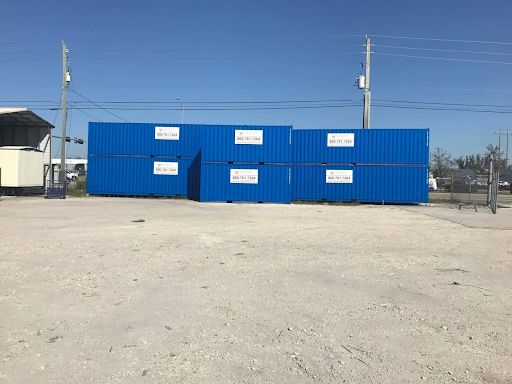
For event storage, Kreate Events used four 40-foot and two 20-foot containers for football event preparations in Miami Gardens. The project used separate storage groups to keep equipment accessible during setup and teardown.
Using the published 20-foot and 40-foot exterior dimensions, one 40-footer occupies 40 × 8 \= 320 square feet. Two 20-footers occupy 2 × (20 × 8) \= 320 square feet. That calculation describes the container footprint only. Door movement, walkways, handling equipment and delivery access need additional space.
20 vs 40 foot shipping container the practical difference
| Decision | One 40-foot container | Two 20-foot containers |
|---|---|---|
| Continuous storage length | One longer interior for long materials and large groups of inventory | Two shorter interiors, with a wall and door assembly between them |
| Access | A single-door configuration has one entrance at the end | Each container has its own entrance |
| Location | All stored items remain in one place | Containers can serve separate work areas |
| Organization | One shared inventory area | Separate tools, trades, phases or inventory categories |
| Site planning | One long placement area and a suitable delivery approach | Two suitable placement areas and access to each |
| Quote comparison | One container, with its delivery and collection charges | Two containers, with the full delivery and collection plan |
Published dimensions on the 20-foot storage container and 40-foot storage container pages show why nominal footprints do not equal usable interior space. Wall construction, corner posts and the doors reduce the area available inside. Use the shipping container dimensions guide for the size comparison, then confirm the actual container's measurements.
What the interior comparison actually shows
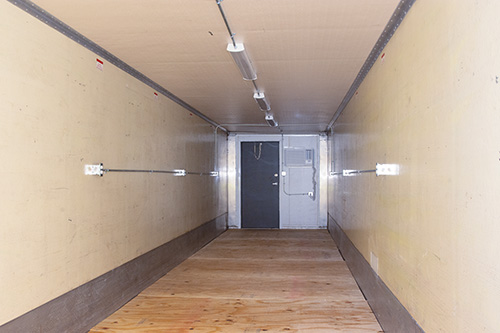
The published interiors give a different result from the exterior footprint. For the linked standard configurations, one 40-footer has an interior length of 39 ft 9 in, while each 20-footer has 19 ft 4 in. Both publish 7 ft 8 in of interior width.
| Calculation from the linked specifications | One 40-footer | Two 20-footers combined |
|---|---|---|
| Approximate interior floor area | 39.75 × 7.6667 = 304.75 sq. ft. | 2 × (19.3333 × 7.6667) = 296.44 sq. ft. |
| Published enclosed volume | 2,390 cu. ft. | 2 × 1,172 = 2,344 cu. ft. |
These are rectangular comparisons rounded to two decimals. They exclude shelves and access aisles. The two smaller interiors remain separate spaces. The difference is about 8.31 square feet of interior floor area and 46 cubic feet of published volume. Long materials still cannot pass through the wall between two separate containers.
Choose one 40 foot container when storage works as one area
A 40-foot container can work well for long materials, centralized inventory, or a site where one storage location serves the full team. Measure the longest item, including packaging and handling equipment, and confirm that it can also pass through the door opening.
Plan for daily access, not only the first delivery. If frequently used tools sit behind long-term inventory, your team may need to move several items to reach them. Sketch the storage rows and route to the back and reserve enough space for safe handling.
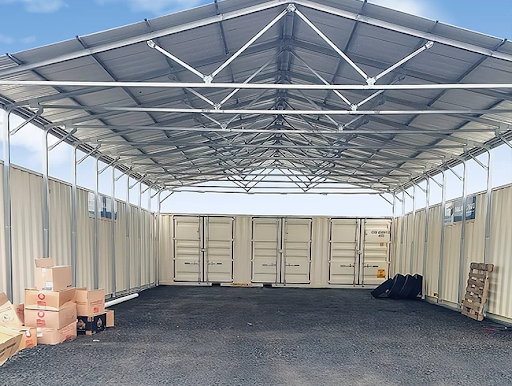
A double-door configuration provides access at both ends. It can help with retrieval, but it requires clearance outside both entrances. Ask about the available configuration, door openings and site layout instead of assuming every 40-foot container has the same access.
Choose two 20 foot containers when separation saves work
Two 20-foot containers can place frequently used supplies closer to separate crews or work areas. They can also separate checked-out tools from bulk materials, current inventory from later-phase stock, or one trade’s supplies from another’s. Each container has its own loading and retrieval point.
The tradeoff is managing two storage areas. Each location needs key control, inventory records, and closing checks. Side-by-side containers require door and walkway clearance, while containers in separate areas must remain accessible throughout the project.
Two 20-foot containers cannot hold the same continuous item length as one 40-foot container. For long pipe, trim or packaged materials, the interior length of each container remains the limiting dimension.
Need help comparing both arrangements? Request a quote with your inventory list and proposed placement areas so you can compare the full cost and access plan.
A real project used more than one size
For football event preparations in Miami Gardens, Florida, Kreate Events used four 40-foot containers and two 20-foot containers from Mobile Modular Portable Storage. The containers kept equipment organized and accessible during setup and teardown.
A mixed fleet gives each storage group a separate space. Choose the number and size of containers from your inventory and access plan, then compare the total delivered quote.
Compare the whole quote not one monthly rate
Request both quotes using the same rental dates, delivery ZIP code, and site-access details. Compare delivery, pickup, rental terms, taxes, and accessories. If either container may need to move during the project, include that requirement before ordering.
For the same rental period, calculate each option as total container rent + delivery + collection + accessories + quoted taxes and fees. Use the quoted total rent rather than multiplying a monthly rate if the rental terms specify minimum periods or different billing. Two entrances may save retrieval work, but the quote must establish whether that benefit justifies the full cost.
Use this comparison sheet:
| Decision | One 40-foot container | Two 20-foot containers |
|---|---|---|
| Continuous storage length | One longer interior for long materials and large groups of inventory | Two shorter interiors, with a wall and door assembly between them |
| Access | A single-door configuration has one entrance at the end | Each container has its own entrance |
| Location | All stored items remain in one place | Containers can serve separate work areas |
| Organization | One shared inventory area | Separate tools, trades, phases or inventory categories |
| Site planning | One long placement area and a suitable delivery approach | Two suitable placement areas and access to each |
| Quote comparison | One container, with its delivery and collection charges | Two containers, with the full delivery and collection plan |
Questions about one large container versus two smaller containers
Do two 20 foot containers provide exactly the same space as one 40 foot container?
They have the same combined nominal exterior footprint, but their usable interiors differ. Two containers include two sets of end walls and doors. Compare published interior measurements and allow for the way you will arrange and retrieve your items.
Are two 20 foot containers easier to deliver?
That depends on the access route, delivery equipment and placement positions. A shorter container does not remove the need for truck maneuvering space or a suitable surface. Share a site sketch with the provider and follow its site preparation guidance.
Can I use one container for storage and another as an office?
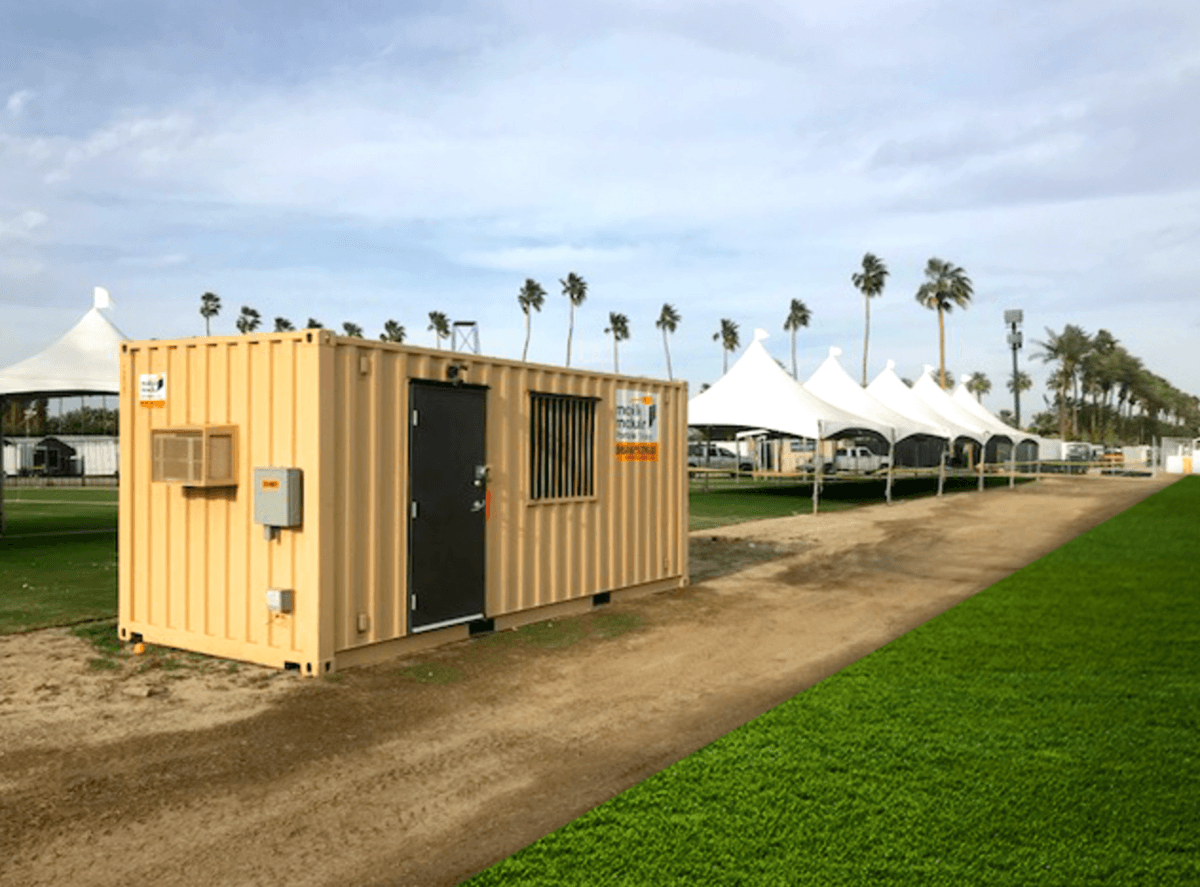
You can ask for separate storage and purpose-built office containers. An unfinished storage container is not a finished workspace. Compare the office container options against the people, furniture and services your team needs.
Which arrangement costs less?
Compare current quotes for your location and dates. Container rates alone do not settle the question because delivery, collection, accessories and any relocation plan affect the total.
Portable Storage can help you compare available sizes and configurations against your actual work. Request a quote for one 40-foot container and two 20-foot containers, with the same project details for each.
Related Blogs