

April 21, 2026
Shipping Container Paint: DTM Types, Costs per Gallon, and Step-by-Step Prep
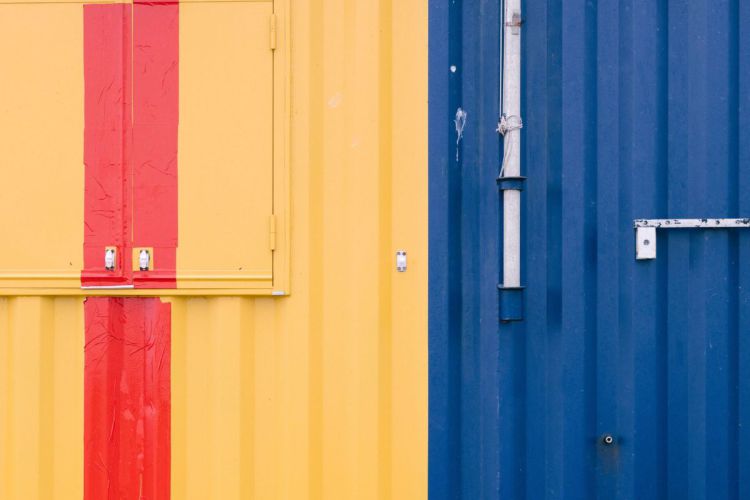
Rust streaks bleeding through the factory coating. A faded beige box sitting on a client-facing jobsite. A purchased container that needs your company colors before the grand opening. These are the three reasons most people start searching for shipping container paint, and each one leads to the same question: what product holds up on corrugated steel, and how much will the job actually cost?
Factory coatings on shipping containers are built for ocean transit, not permanent aesthetics. Once a container sits on land for a few years, UV exposure and surface scratches give moisture a path to the steel underneath. A proper repaint stops corrosion, extends service life by a decade or more, and lets you match any brand color or site requirement.
DTM Marine-Grade Paint: The Top Choice for Corrugated Steel
Direct-to-Metal (DTM) waterborne paint is the single best option for most shipping container projects. DTM formulas bond directly to steel without requiring a separate primer coat, which cuts your material list, labor time, and total cost.
The standout product in this category is marine-grade DTM paint like Rust Grip. It functions as primer, intermediate coat, and topcoat in one application. Cured film strength reaches 6,780 psi tensile, and it carries a 15,000-hour salt spray test rating. For context, standard industrial primers fail salt spray testing at around 1,000-2,000 hours. That difference matters on a container sitting outdoors year-round.
Why DTM outperforms traditional primer-plus-paint systems:
• Eliminates the primer coat entirely, saving 40 in materials and a full day of drying time
• Bonds to lightly rusted surfaces, so you don’t need to strip the container down to bare metal
• Waterborne formula keeps VOC levels low, making it safer for on-site application without specialized ventilation
• Single-product system reduces the chance of adhesion failure between incompatible primer and topcoat layers
DTM waterborne paint runs 70 per gallon depending on brand and quantity. For most 20-foot containers, you’ll need 3-4 gallons for one exterior coat, putting material cost between $120 and $280.
Urethane and Acrylic Topcoats: When to Pick Each One
If you need maximum UV resistance and scuff protection, urethane topcoats outperform every other option. They hold gloss longer, resist chemical exposure, and stand up to forklift scrapes and equipment bumps better than acrylic or alkyd finishes. The tradeoff is price: 100 per gallon. Urethane also requires more careful application, including temperature-sensitive mixing ratios and mandatory respirator use during spraying.
Acrylic paint works well for branding, murals, and color-matching projects where the container won’t take heavy physical abuse. At 40 per gallon, it’s the cheapest option. Color vibrancy is excellent. Durability is moderate. Plan on repainting acrylic-coated containers every 2-3 years in harsh climates.
Alkyd enamel sits in the middle at 50 per gallon. It produces a glossy, hard finish that lasts 5-10 years. Application is straightforward with brush, roller, or spray. Alkyd is a solid choice for purchased containers that won’t be moved frequently.
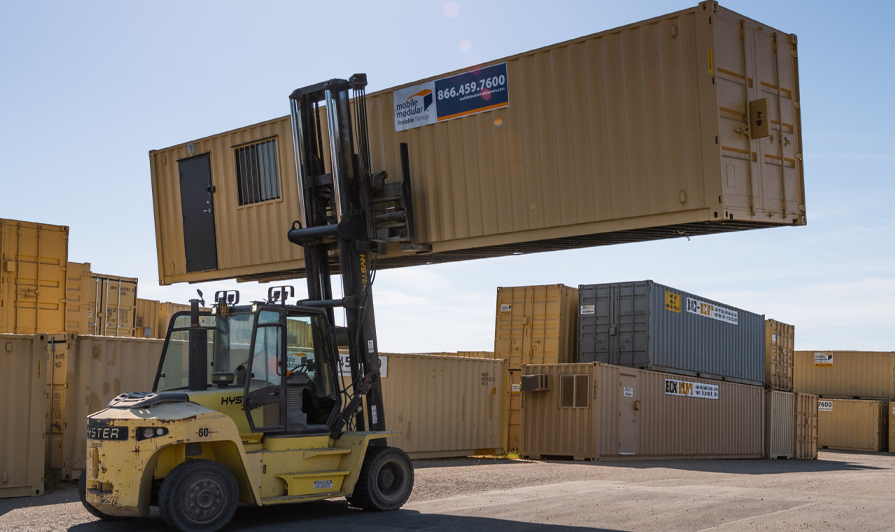
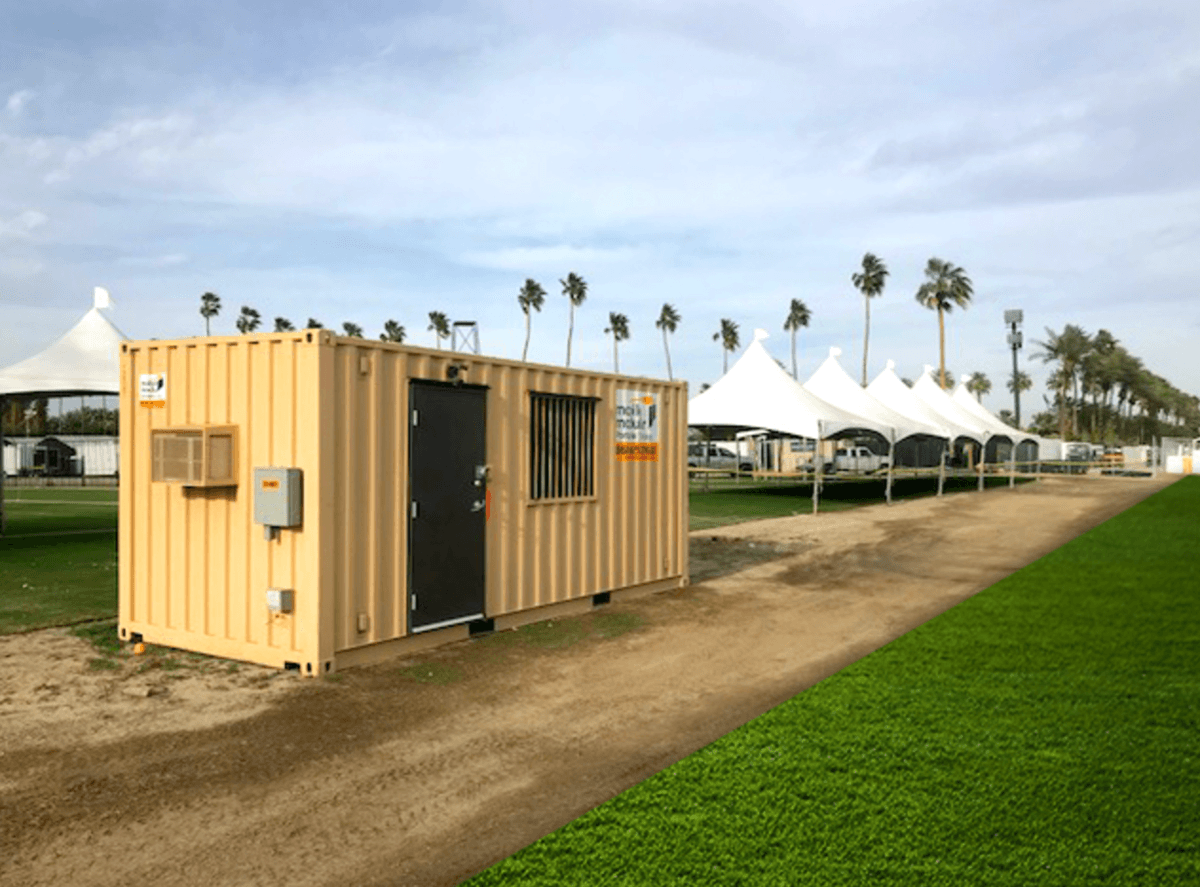
For rental containers from Mobile Modular Portable Storage, the standard beige finish works for most jobsite applications. If you’ve purchased a container for sale and plan to customize it, DTM marine-grade or urethane topcoat will give you the longest service life.
Surface Prep at 2,500-3,000 PSI: The Step That Determines Paint Life
Surface prep accounts for roughly 70% of how long your paint job lasts. Skip this section, and you’ll be repainting within a year.
Step 1: Pressure wash the entire exterior. Set your pressure washer between 2,500 and 3,000 PSI. Work top to bottom, hitting every corrugation valley where dirt, salt residue, and mildew collect. Let the container dry completely, which takes 4-8 hours in direct sun.
Step 2: Remove loose rust and flaking paint. Use an orbital sander with 80-grit paper on flat panels. Switch to a wire wheel attachment on an angle grinder for corrugation valleys and door hinges. Focus on rust spots, scratches, and any area where the factory coating has broken down. You’re not trying to reach bare steel across the whole container, just on damaged sections.
Step 3: Clean the surface with a solvent wipe. Rubbing alcohol or a commercial wax-and-grease remover eliminates microscopic dust, oil residue, and contaminants that block paint adhesion.
Step 4: Make the primer decision. If you’re using DTM paint, skip the separate primer entirely. If you’re applying acrylic or alkyd enamel, lay down one coat of rust-inhibiting metal primer and let it cure for 24 hours before your topcoat.
Why You Should NOT Sandblast a Shipping Container
Sandblasting a shipping container removes the original marine-grade zinc primer that was applied at the factory. That zinc layer is your best first line of defense against corrosion. Stripping it off means you’re starting from zero on a surface that was already protected.
Professional sandblasting also costs 3 per square foot. A 20-foot container has roughly 1,360 square feet of total surface area (see our container dimensions guide for exact specs). At those rates, blasting alone could run 4,080 before a single drop of paint is applied. Pressure washing, orbital sanding, and wire wheel work accomplish what you need at a fraction of the cost.
DIY Painting Process: Tools, Technique, and Drying Times
Spray application delivers the most uniform finish on corrugated steel. An airless sprayer rated at 3,000 PSI with a .017-.021 tip covers corrugation valleys without pooling. Rental cost runs 150 per day from most equipment yards.
Brush and roller application works but takes 2-3 times longer and leaves visible lap marks on ridged panels. Use a 3/4-inch nap roller for flat sections and a 2-inch angled brush for corrugation grooves and corner posts.
Application conditions matter. Paint when ambient temperature is between 50°F and 85°F, humidity is below 85%, and no rain is forecast for 24 hours. Early morning on a dry day is the ideal window. Avoid painting in direct afternoon sun on hot days, as rapid surface drying causes bubbling and poor adhesion.
Coat schedule:
• First coat: Apply evenly, working from top to bottom in overlapping horizontal passes. Allow 4-6 hours of drying time (check your specific product’s recoat window).
• Second coat: Apply perpendicular to the first coat’s direction for full coverage. Two coats is the minimum for a durable exterior finish.
• Third coat (optional): Recommended for containers in coastal, high-humidity, or high-UV environments.
Most DTM waterborne paints reach handling cure in 24 hours and full cure in 7 days. Do not stack anything against freshly painted walls during the cure period.
Professional vs. DIY Cost Comparison by Container Size
The real cost gap between doing it yourself and hiring a crew comes down to equipment rental and labor hours, not materials.
| Cost Category | 20-Foot Container (DIY) | 20-Foot Container (Pro) | 40-Foot Container (DIY) | 40-Foot Container (Pro) |
|---|---|---|---|---|
| Paint and primer | 280 | 350 | 560 | 700 |
| Prep materials (sandpaper, solvent, tape) | 60 | Included | 80 | Included |
| Equipment rental (sprayer, pressure washer) | 200 | Included | 200 | Included |
| Labor | Your time (8–16 hours) | 2,500 | Your time (16–30 hours) | 4,000 |
| Total | 600 | 3,000 | 1,000 | 5,000 |
DIY makes financial sense if you have the time, basic equipment access, and are comfortable working at height. Professional crews are worth the cost for multi-container projects, containers requiring heavy rust remediation, or any job where downtime costs more than the painting labor.
Paint Quantity and Cost Estimates by Container Size
| Container Size | Gallons Needed (Exterior, 1 Coat) | DTM Paint Cost ($70/gal) | Acrylic Cost ($40/gal) |
|---|---|---|---|
| 10 ft | 1.5–2 gallons | 140 | 80 |
| 20 ft | 3–4 gallons | 280 | 160 |
| 40 ft | 5–8 gallons | 560 | 320 |
Double these quantities if you’re painting the interior as well. For two exterior coats, which is the recommended minimum, multiply by 1.8 (not 2x, because the second coat requires less paint than the first on a properly prepped surface).
Mobile Modular Portable Storage carries storage container rental units in 10-foot, 20-foot, 24-foot, and 40-foot containers. Standard rentals arrive in a neutral beige finish that works for most commercial and construction applications.
Vinyl Wrap as an Alternative: 5,000 for Full Coverage
Vinyl wrapping a shipping container costs 5,000 for a full exterior wrap, with a 5-7 year lifespan before replacement. The main advantage over paint is removability. If you’re using a rental container for a temporary branded activation, event, or pop-up retail location, a vinyl wrap lets you return the unit to its original condition at the end of the lease.
Vinyl also handles complex graphics, photographic images, and multi-color designs better than paint. For custom shipping containers used as branded retail or marketing spaces, wrapping is often the smarter investment even at the higher upfront cost.
Paint wins on longevity and total cost for permanent installations. Vinyl wins on flexibility and visual complexity for temporary or promotional use.
Repaint Cycle: Inspect Every 3-5 Years, Touch Up Before It Spreads
A properly applied two-coat DTM or urethane system should last 5-10 years before a full repaint is needed. The real maintenance schedule is an annual visual inspection with spot touch-ups on an as-needed basis.
Walk the container perimeter once a year. Check door hinges, bottom rails, corner castings, and any area where the paint shows chips or scratches. These are the spots where rust starts. Hit them with a wire brush, solvent wipe, and a small can of matching DTM paint before the corrosion spreads. A 15-minute touch-up now prevents a $1,000+ full repaint later.
Plan for a full repaint every 3-5 years in coastal or high-humidity climates, and every 7-10 years in dry inland environments.
Safety Requirements for Container Painting
Spray painting a shipping container produces airborne particulates and solvent vapors that cause respiratory damage with repeated exposure. Minimum PPE for any container painting job includes:
• Respirator: A P100 half-face or full-face respirator with organic vapor cartridges. Cloth masks and paper dust masks do not filter paint particulates.
• Eye protection: Sealed safety goggles, not open-frame safety glasses. Wire brush fragments and paint overspray hit from all angles.
• Coveralls: Disposable full-body suits prevent skin contact with solvents and make cleanup easier.
For interior painting, keep both container doors fully open and position a fan at one end to create airflow through the box. Interior spaces concentrate vapors rapidly. Apply a zinc-rich primer first, then a waterborne epoxy or DTM topcoat. Never spray paint onto the wooden floor; use a brush or roller for floor-adjacent surfaces to avoid overspray pooling.
Need a container before the paint project starts?
Mobile Modular Portable Storage delivers 10-foot through 40-foot units from 30+ locations across 27 states, with quote responses within 1 hour and 30-day billing cycles that save you 8.3% compared to 28-day competitors. Request a quote or call 225-269-2349 or call 225-269-2349 to lock in your container—just note, painting is only permitted with purchased units.
Frequently Asked Questions
How much does it cost to paint a 20-foot shipping container?
DIY materials cost 600, which covers DTM paint (3-4 gallons at 70 each), prep supplies, and equipment rental. Professional painting runs 3,000 for a 20-foot unit including surface prep, primer, and two topcoats. The biggest variable is the condition of the container. Heavy rust remediation adds 800 to professional quotes.
What is DTM paint, and why is it recommended for shipping containers?
Can I paint a shipping container with Rustoleum?
Should I paint or vinyl wrap my shipping container?
How often does a painted shipping container need to be repainted?
Related Blogs